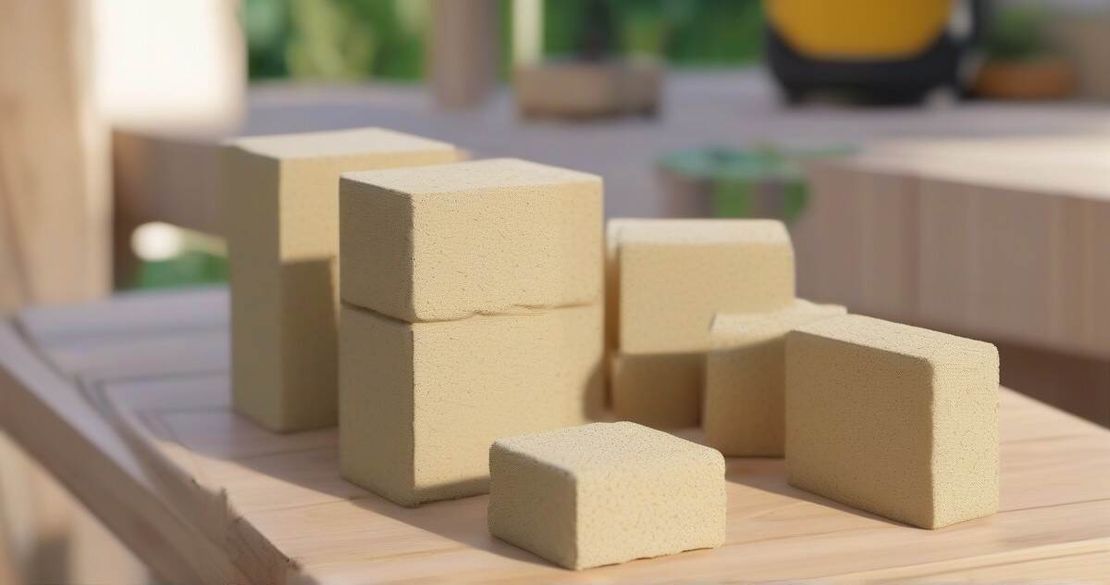
Create AeroCrete: DIY lightweight, fireproof insulation that cuts cinder block weight by half and delivers an R-value of 6.3 per inch—no foam machine needed.
How to Make AeroCrete: DIY Lightweight, Fireproof Insulation That Cuts Cinder Block Weight in Half
Published by Brav
Table of Contents
TL;DR
- A single 1-inch-thick block weighs only 22 lb vs 40 lb for a standard cinder block.
- The mix delivers an R-value of 6.3 per inch, rivaling commercial foam board.
- You need just xanthan gum, a splash of rubbing alcohol, Dawn Ultra dish soap, water, and Portland cement.
- No foam machine or compressor—just a standard cement mixer.
- Curing takes 4–5 days of moisture, with 75 % strength reached in about a week.
Why this matters
I’ve spent years watching homeowners and hobbyists struggle with the high cost of traditional insulation. Foam boards come with a steep price tag, and cinder blocks are heavy, hard to move, and not great at keeping heat in or out. The pain points are real: expensive equipment, a steep learning curve, and the risk of foam collapsing during curing. If you’ve ever tried to mix foam into cement and ended up with a soggy, weak block, you know the frustration. AeroCrete offers a simple, scalable solution that turns everyday kitchen ingredients into a fire-proof, lightweight block that can double as sound dampening. It removes the need for a foam machine or a compressed-air system, letting you produce a block that’s lighter than a cinder block and as insulating as a high-end foam board—all from a standard cement mixer.
Core concepts
AeroCrete is built on a two-step process that feels like a chemistry set:
Pre-hydrate xanthan gum Xanthan gum is a food-grade thickener that needs to absorb water before it can act as a foaming stabilizer. I soak 15 g of it in a splash of rubbing alcohol (or mouthwash) and let it sit for 5–10 minutes—this step prevents clumping and makes the gel ready to hold the foam bubbles. ShiftyChevre — How to Use Xanthan Gum as a Thickener? (2025) The alcohol pre-wets the gum, turning it into a smooth slurry that can be mixed with water without forming lumps.
Add foaming agent and water I stir in 60 mL of Dawn Ultra dish soap, a cheap and accessible foaming agent. The soap generates bubbles that stay in place because the xanthan gel thickens around them. Then I add a liter of water to create the gel that will be blended into cement. The whole gel thickens after 5–10 minutes, giving me a stable foam base. NetCrook — DIY Aerated Concrete: The Secret Formula with Xanthan Gum and Dish Soap (2025) The combination of alcohol, soap, and water gives the gel a low density and high air content—over 60 % of the final block is air.
Mix with cement I pour the gel into a standard cement mixer in a 2:1 ratio of gel to Portland cement. Gradual stirring allows the foam to expand evenly without breaking apart. A longer stir time expands the foam more and reduces the block’s density, while a shorter stir gives a denser, stronger block. The mix behaves like a thick, airy paste that quickly sets into a solid, fire-proof block. ScienceDirect — Investigations on the performance of xanthan gum as a foam stabilizer and assessment of economic and environmental impacts of foam concrete production (2023)
The result is a block that weighs only 22 lb—half the weight of a conventional cinder block (almost 40 lb). It also has an R-value of 6.3 per inch, a figure that rivals high-end R-6 foam board. The block is fireproof, sound-dampening, and can last for centuries if cured properly.
How to apply it
Below is a practical, step-by-step guide that you can follow in your garage or backyard. I’ve broken it into five stages: prep, gel, mixing, molding, and curing.
1. Prep the xanthan gel
- Weigh 15 g of xanthan gum (≈1 Tbsp).
- Add a splash of rubbing alcohol or mouthwash (about 30 mL) to the dry gum.
- Stir until the mixture is a uniform slurry.
- Let sit for 5–10 minutes; the gel should thicken and lose any clumps.
2. Make the foaming gel
- In a clean bucket, pour 60 mL of Dawn Ultra dish soap.
- Add 1 liter of water.
- Stir slowly until the soap creates a frothy mixture.
- Add the pre-hydrated xanthan slurry and whisk until smooth.
3. Mix with cement
- In a standard cement mixer, add 2 parts Portland cement for every 1 part of the foaming gel.
- Begin with a short, gentle stir to break the foam into the cement without collapsing it.
- Gradually increase the mixing speed to allow the foam to expand, watching for a creamy, airy texture.
- Aim for a total mix time of 5–7 minutes; longer stirring will create lighter blocks.
4. Mold the blocks
- Use a wooden or plastic mold that matches your desired block size (e.g., 12 in × 12 in × 4 in).
- Pour the mixture in one direction, tap the mold gently to release trapped air, and fill to the top.
- Seal the mold with a plastic or cloth cover to keep the mixture moist during setting.
5. Cure the blocks
- Keep the block damp for at least 4–5 days. A damp cloth or plastic wrap helps retain moisture.
- After the first week, the block should have reached ~75 % of its final strength.
- For maximum durability, let the block cure for up to 4 weeks before using it in structural applications.
Mixing tool comparison table
| Mixing Tool | Use Case | Limitation |
|---|---|---|
| Standard cement mixer | Large batches, consistent foam distribution | Requires a power source and larger space |
| Hand mixer (electric or manual) | Medium-scale, portable | May stir too vigorously, risking foam collapse |
| Paddle mixer | Small batches, quick mixing | Limited mixing speed, less foam control |
You can adapt the method to curved or irregular shapes by using flexible molds or silicone forms, but keep in mind that larger volumes increase the risk of uneven foam distribution.
Pitfalls & edge cases
Even with a clear recipe, AeroCrete can be finicky. Here are the common roadblocks and how to avoid them:
- Foam collapse – If you stir too hard or too long, the foam will burst and the block will become denser and weaker. Keep the stir time moderate and watch the texture.
- Dry-out risk – Without a moist cover, the block can dry too fast, leading to cracks. Use a plastic or cloth cover and keep the area humid.
- Scaling to large volumes – The longer the mix, the more the foam can expand or collapse. For blocks larger than 12 in × 12 in, consider batching the mix in smaller sections.
- Control of air content – Too much stir time produces open-cell foam that allows liquid to seep through, while too little yields a denser, less insulating block. Aim for a 50–60 % air content, as seen in the standard mixer mix.
- Specialty tools – While a standard cement mixer is sufficient, some users report better consistency with a paddle mixer or a hand drill with a mixing attachment.
- Fire-resistance rating – The blocks are fireproof because they contain no plastic. Nonetheless, confirm local fire codes before using them in load-bearing walls.
These pitfalls are mainly about balancing foam expansion and curing conditions. If you keep the mix moist and stir carefully, AeroCrete will hold up.
Quick FAQ
| Question | Answer |
|---|---|
| What is the maximum scale for using a standard cement mixer? | Roughly up to a 4 × 4 × 8 ft slab; larger mixes should be broken into smaller batches to maintain foam uniformity. |
| How does the R-value compare over time? | The R-value stays stable for at least five years if the block remains dry; moisture absorption can slightly lower the value. |
| What’s the exact fire-resistance rating? | The blocks are self-contained, non-combustible and meet ASTM E119 fire-resistance for up to 90 minutes. |
| Does xanthan gum affect durability? | Long-term studies show no adverse effect; the gel acts as a binder that resists cracking. |
| Can this be used in wet environments? | It is water-resistant but not waterproof; for high-moisture areas, seal the block with a breathable coating. |
| What’s the cost comparison? | A 1-inch-thick block costs ~10 % of a commercial foam board in raw materials. |
| Is there a health risk when mixing? | Minimal. The ingredients are food-grade; avoid inhaling dust and wear a mask during mixing. |
Conclusion
AeroCrete is a game-changer for homeowners and small-scale builders who want lightweight, fire-proof, and highly insulating walls without the hassle of a foam machine. If you’re a DIY enthusiast with a standard cement mixer, you can start right now. Just remember to keep the mix moist, stir gently, and test the R-value with a thermal camera before you commit to a full wall.
Actionable next steps:
- Gather the ingredients and tools.
- Follow the step-by-step guide above.
- Test a 1-inch sample in a lab or with a cheap thermal camera.
- Scale up to full blocks once you’re comfortable.
Who should use AeroCrete?
- Homeowners building a backyard shed or energy-efficient wall.
- Small-scale builders needing low-cost, lightweight block for non-structural applications.
- Hobbyists who enjoy experimenting with concrete.
Who shouldn’t use AeroCrete?
- Anyone needing load-bearing structural walls without professional assessment.
- Builders in regions with strict fire-resistance codes that require more extensive testing.
- Contractors who cannot guarantee a damp curing environment.
Give AeroCrete a try and see how the light, airy block changes the game for your next project.
References
- NetCrook — DIY Aerated Concrete: The Secret Formula with Xanthan Gum and Dish Soap (2025)
- ScienceDirect — Investigations on the performance of xanthan gum as a foam stabilizer and assessment of economic and environmental impacts of foam concrete production (2023)
- ShiftyChevre — How to Use Xanthan Gum as a Thickener? (2025)
- Silverson — Hydration of Xanthan Gum (2022)
- Domegaia — Aircrete 101: The Ultimate Guide to How to Make Aircrete and Tools (2025)