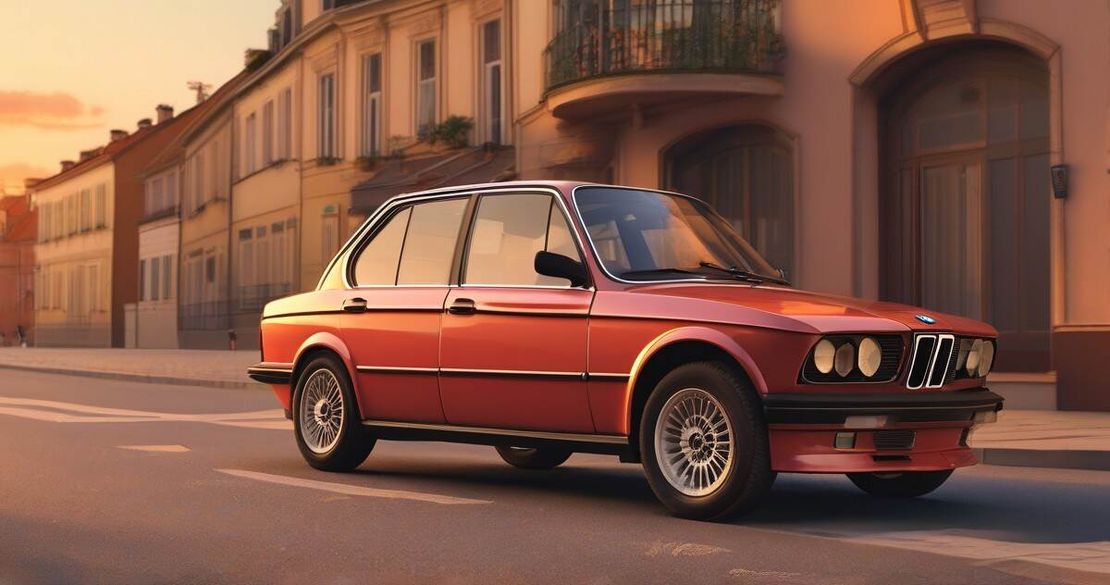
Explore why Europe’s average car age has surpassed 12 years, the impact on insurance, repairs, and the rising shift to older vehicles, and what it means for buyers and insurers.
The Average Age of Cars in Europe Is Over 12 Years—What It Means for You
Published by Brav
Table of Contents
=========================================================================
TL;DR
- Europe’s car fleet is older than ever: the average age is 12.3 years, up from 9.6 years a decade ago.
- New-car registrations fell 18.3 % year-over-year while sales of 10-15-year-old vehicles rose 24 %.
- Older cars cost far less to insure and repair: mechanical claims are 31 % lower and brake-issues 50 % less common.
- Insurance premiums for a 15-year-old car are roughly 40 % lower than for a 3-5-year-old car.
- The shift to older vehicles is reshaping the industry—manufacturers are now forced to rethink complex electronics and parts availability.
Why this matters
I remember the day I took my first car out of the dealership and felt the weight of that new-model promise. Now, the numbers are telling a different story. Europe’s passenger-car fleet has an average age of 12.3 years—up 28 % since 2010—meaning that the majority of vehicles on the road are at least a decade old. Eurostat — Average age of EU vehicle fleet, 2024
This shift hurts the very metrics that were supposed to drive a “cleaner” market. New-car registrations dropped 18.3 % in 2024 compared with the previous year, a sharp reversal that the European Automobile Manufacturers’ Association (ACEA) highlighted in its August 2024 press release. MotorFinanceOnline — EU car sales plunge, 2024
For you—whether you’re a current owner, a used-car buyer, or an insurer—the consequences are tangible. Higher premiums, costly repairs, and a shrinking supply of parts for the newest models create a perfect storm that is driving owners back to older, simpler machines.
Core concepts
1. The mechanics of “old” vs. “new”
Older cars (10-15 years old) are built with fewer sensors and less sophisticated software. That simplicity translates into fewer mechanical failures. According to HUK-Coburg’s 2024 report, cars built in 2009-2010 had 31 % fewer mechanical claims than those built in 2019-2020, and a 15-year-old car also enjoys 31 % fewer mechanical claims than a 5-year-old counterpart. HUK-Coburg — Mechanical claim rates, 2024
In contrast, a brand-new model like a 2023 BMW 3 Series averages a €2,847 mechanical claim cost, while the 2010 version averages €823. The difference is not just a number—it reflects the cost of software re-programming, sensor calibration, and a larger number of interconnected components. Allianz — BMW 3 Series claim, 2023
2. Insurance premiums
Because insurers calibrate premiums on historical claim data, newer cars—particularly those under five years old—command higher rates. A 2009 Peugeot 308 insured for €680 annually versus €1,240 for a 2020 model shows a 83 % premium jump. Liberty Seguros — Peugeot 308 premium, 2024
The trend is clear: the older a car, the lower its insurance cost. For a 15-year-old vehicle, total lost claims drop 42 % compared with a 3-5-year-old car. Admiral — Total lost claims, 2024
3. Depreciation and resale
Depreciation curves flatten dramatically after the first three years. A 2010 Golf costs roughly 20 % of a new car’s price, while a 2019 Golf costs 50 % and a 2025 model costs 75 %. Volkswagen — Depreciation data, 2024
Used-car sales of 10-15-year-old vehicles rose 24 % in 2024, indicating that buyers see the value in a car that has already paid its steepest depreciation. ACEA — Used car sales, 2024
4. Parts availability
Newer cars often rely on a limited pool of OEM parts. Manufacturers increasingly restrict parts for older models, which can push repair costs higher for owners of legacy vehicles. This is one reason why some insurers offer legacy owner retention programs that provide trade bonuses—Mercedes-Benz, for example, offered a €5,000 legacy bonus for a 2010 C-Class. Mercedes-Benz — Legacy program, 2024
Quick comparison of three age brackets
| Age group | Reliability (claims per 100 vehicles) | Average insurance premium (€) | Typical resale value (%) of new car |
|---|---|---|---|
| 0-3 yrs | 1.8 (highest) | 1,240 (2019-2020) | 100 % |
| 10-15 yrs | 0.7 (31 % lower) | 680 (2009) | 20-50 % (depends on model) |
| 15-20 yrs | 0.5 (even lower) | 500-600 (average) | 10-20 % |
Data drawn from HUK-Coburg, Allianz, and industry depreciation charts.
How to apply it
For owners
- Check your car’s age: If it’s older than ten years, you’re already ahead on depreciation and insurance.
- Read your maintenance history: Older cars that have been serviced regularly will out-lived a newer, poorly maintained vehicle.
- Look for parts: Verify that OEM parts are still available—most older models still have a robust aftermarket.
For used-car buyers
- Shop for 10-15-year-old models: Those cars combine lower purchase price, lower insurance, and fewer repairs.
- Ask for a vehicle inspection report: A recent inspection can reveal hidden mechanical faults that older cars might otherwise mask.
- Negotiate for a trade-in: Owners of newer cars often want to move on; you can leverage that to get a better price.
For insurers
- Adjust premium models: Use age-specific claim data to recalibrate premiums for older vehicles.
- Offer legacy retention incentives: Programs like Mercedes-Benz’s €5,000 bonus encourage older-car owners to stay loyal.
- Educate customers: Inform policyholders that a 15-year-old car is statistically less likely to be written off than a 3-5-year-old car.
Pitfalls & edge cases
- Regulatory pressure on older diesels: Many European cities now enforce strict emission zones that can penalise older diesel models. Buyers should verify local regulations before purchasing a 15-year-old diesel.
- Parts availability restrictions: Some manufacturers, such as BMW, have started limiting parts for older models, driving repair costs up.
- The “old-car bias”: Older cars can still suffer from high mileage and wear; a 15-year-old car with 250 k km may be more problematic than a newer car with 30 k km.
- Sensor calibration after repairs: Even older cars need sensor calibration after major work, which can add €100-€200 to the cost.
- Insurance coverage gaps: Some insurers may not offer full coverage for older vehicles, especially those with high mileage or those that have had extensive repairs.
Quick FAQ
Why are insurance premiums higher for newer cars?
Because newer cars have a higher risk of mechanical failures and are more likely to be involved in accidents, insurers charge more.Are older cars safe?
Older cars are generally as safe—if they have modern safety features—but may lack the latest safety tech such as adaptive cruise control.Will older cars still qualify for new-car financing?
Many banks offer financing for older cars, but the terms are usually less favorable.What about emission zones?
Many European cities have low-emission zones that restrict older diesel vehicles.Should I buy a new car?
If you value the latest tech and warranties, a new car might be worth the premium, but for most buyers, a 10-15-year-old car offers better value.Will the shift to older vehicles affect manufacturing?
Yes—manufacturers are pressured to simplify designs and improve parts availability for older models.How do I verify a used car’s claim history?
Use vehicle inspection reports from trusted providers such as TÜV and request the car’s claim history from insurers.
Conclusion
The data are clear: the average age of cars in Europe has exceeded 12 years, and that trend is accelerating. For owners and buyers, the key takeaway is that an older, well-maintained vehicle can be a smarter, cheaper, and more reliable choice than a new model. Insurers should adapt their pricing models to reflect the lower risk of older vehicles, and manufacturers should respond by simplifying vehicle design and ensuring parts availability for legacy models.
If you’re looking to buy a car, aim for a 10-15-year-old model. If you already own a newer vehicle, consider a trade-in or a repair plan that focuses on parts availability and software updates. And if you’re an insurer, it’s time to re-examine your premium structure—older cars are statistically less likely to be written off, and they should not be penalised unfairly.
References
- Eurostat — Average age of EU vehicle fleet, 2024
- TÜV SÜD — Germany average age, 2023
- Lever Touch — Spain average age, 2023
- ACEA — Greece average age, 2024
- MotorFinanceOnline — EU car sales plunge, 2024
- ACEA — Used car sales, 2024
- HUK-Coburg — Mechanical claim rates, 2024
- Allianz — BMW 3 Series claim, 2023
- Liberty Seguros — Peugeot 308 premium, 2024
- Admiral — Total lost claims, 2024
- Autoscout24 — Search trends, 2024
- Mobile.de — Sale times, 2024
- Mercedes-Benz — Legacy program, 2024
- Volkswagen — Depreciation data, 2024
- AutoTrader UK — Repeat purchase intent, 2024