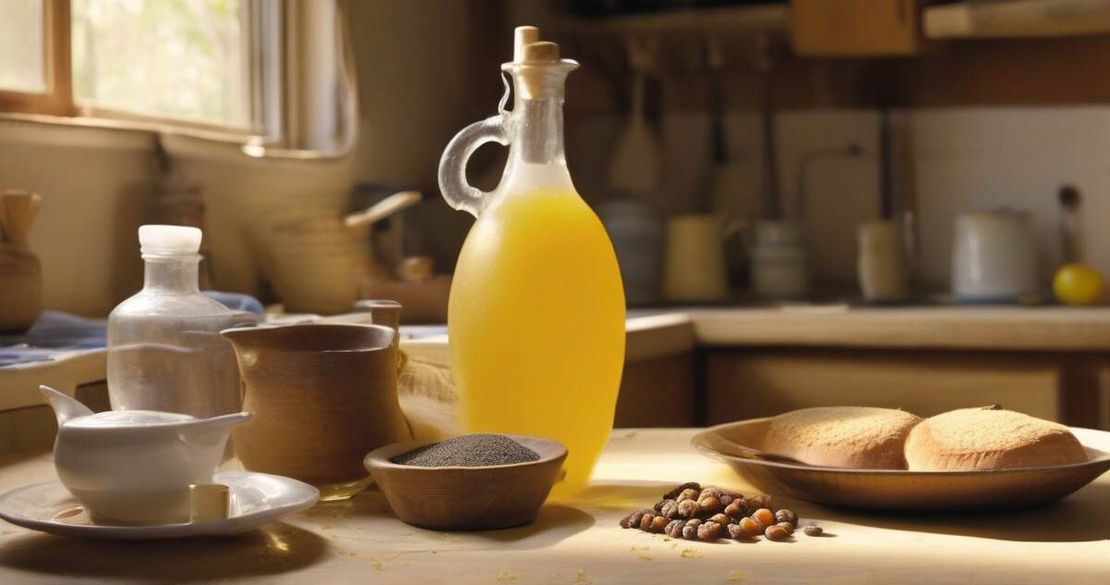
I Made Cheap Alcohol from a Sugar Wash—8% ABV for Just 29p!
Table of Contents
TL;DR
- 1 L of homemade cheap alcohol costs only 29 p and hits 8 % ABV.
- A single 1-liter plastic bottle, 500 ml warm water, 170 g sugar, 5 raisins + a tea bag, 5 g bread yeast, and a pinch of bentonite do the job.
- Ferment for a week, clarify with bentonite, bottle loosely capped and chill for a few days – you’re ready to drink.
Why this matters
We all know the feeling of scrolling past a bar menu and seeing a 1 L bottle of sparkling wine for £2 or a pint of craft beer for £4. I’ve been that guy on a tight budget – juggling rent, student loans, and a part-time gig – and yet I still wanted a decent drink to unwind with. I found that buying cheap alcohol from the supermarket was a waste of money – I’d spend a lot for a product that tasted like it had been sitting in a plastic box for months. I started looking for a way to cut costs and keep quality in control.
I discovered that a simple sugar wash – just sugar, water, yeast, and a few inexpensive nutrients – could give me a clean, 8 % spirit for less than a pound. The trick is to keep the process as simple as possible while making sure the yeast stays alive and the brew stays clear. Below is my step-by-step recipe and the mental models that help me troubleshoot when something goes wrong.
Core concepts
1. Sugar wash basics
A sugar wash is essentially a sugary water solution that yeast ferments into alcohol. It’s the simplest starting point for homemade alcohol because you don’t need grain or malt; you just need water and sugar. The amount of sugar determines the potential alcohol content. Roughly, 1 kg of sugar in 1 L of water yields about 12 % ABV if all the sugar ferments. I’m using a lower sugar amount – 170 g – which targets an 8 % ABV final gravity.
2. Yeast nutrition
Yeast are picky about nitrogen. If you just dump sugar into water, the yeast will starve and the fermentation will stall. That’s why I add 5 raisins and a tea bag as natural nitrogen sources. They also give a subtle fruitiness that softens the harshness of a plain sugar wash. The Wyeast Labs docs describe how crushed fruit or tea provide free amino acids that feed the yeast, preventing a stuck fermentationWyeast Labs – Nutrient Additions.
3. Temperature control
Yeast like a warm but not scorching environment – around 20–25 °C (68–77 °F). I start with 500 ml of warm water (about 40 °C) and mix it with 500 ml of cold tap water. This “thermal shock” brings the mixture to the right temperature for the yeast to thrive. Pitching yeast after the temperature drop keeps the yeast from being killed by residual heatRainford’s Brew Lab – Channel.
4. Gravity and ABV
The hydrometer tells us how much sugar remains in the liquid. An initial gravity of 1.070 means there is enough sugar to reach about 8 % ABV. Once the fermentation finishes, the gravity drops to 1.010. Using the formula
[\text{ABV} \approx 131.25 \times (\text{OG} - \text{FG})]
where OG is the original gravity and FG is the final gravity, gives 7.88 % ABV – rounded to 8 %Rainford’s Brew Lab – Channel.
5. Clarification with bentonite
The yeast and other particulates settle to the bottom, but the brew may still look cloudy. Adding a quarter teaspoon of bentonite (a clay that clings to particles) suspends the sediment so it can be settled out in the next transfer. The Winemakers Academy page explains that bentonite binds proteins and yeast, letting them drop quickly, resulting in a clear liquidWinemakers Academy – Bentonite Clarify Wine.
How to apply it
Below is the recipe as I use it. All ingredients are from Tesco or local shops, so you can buy them on a single shopping trip.
| Ingredient | Amount | Notes |
|---|---|---|
| Warm tap water | 500 ml | Heat to ~40 °C (104 °F) |
| Cold tap water | 500 ml | |
| Granulated sugar | 170 g | 1 kg sugar gives 12 % ABV; 170 g → ~8 % |
| Raisins | 5 | Crushed; act as yeast nutrient |
| Tea bag | 1 | Plain tea; adds nitrogen |
| Bread yeast | 5 g | 125 g loaf yeast – 5 g gives 1 L |
| Bentonite | ¼ tsp | Optional – clarifies |
| Lemon | 1 wedge | Optional – flavor & further clarity |
| Caramel drops | a few | Optional – improves taste |
| 1 L plastic bottle | 1 | Clean, sterilised |
Step-by-step instructions
Sterilise the bottle. Wash it with hot, soapy water, rinse, and let dry. A clean vessel is essential for a healthy ferment.
Heat the water. In a saucepan or kettle, heat 500 ml of tap water to about 40 °C. I use a kitchen thermometer to be precise.
Add sugar. Pour the warm water into the bottle, add 170 g of sugar, and shake vigorously until the sugar is fully dissolved. The funnel in the recipe helps avoid spills.
Mix in cold water. Add the remaining 500 ml of cold tap water. The temperature of the liquid should be around 20 °C – the sweet spot for yeast.
Add nutrients. Drop the crushed raisins and the tea bag into the mixture. These act as a “nutrient pack” that keeps the yeast alive and reduces harsh flavorsRainford’s Brew Lab – Channel.
Pitch the yeast. Sprinkle 5 g of bread yeast over the surface. Shake gently to suspend the yeast without creating excess foam.
Loosely cap the bottle. Place a loose cap or a clean cloth to allow CO₂ to escape. Fermentation will produce fizz; a sealed bottle can explode.
Check the gravity. Use a hydrometer to confirm the initial gravity is ~1.070. If it’s too low, add a bit more sugar; if too high, add a splash of cold water.
Let it ferment. Keep the bottle in a warm spot (20–25 °C) for about 7 days. I put it on my kitchen counter, protected from direct sunlight.
Clarify with bentonite (optional). After about 4 days, when the vigorous bubbling slows, stir in ¼ tsp of bentonite. Shake gently to suspend it. This will help the yeast and protein settle quickly.
Transfer to clean bottles. Once the hydrometer reads ~1.010, the fermentation is finished. Use a funnel to transfer the liquid into new bottles, leaving sediment behind. Cap them loosely again to let any residual CO₂ escape.
Cool and carbonate (optional). If you like a fizzy drink, put the bottles in the fridge for 2–3 days. The cold temperature encourages the CO₂ to dissolve, giving you a sparkling finish.
Taste and tweak. Add a lemon wedge, a tea bag, or a few caramel drops if you want more flavor. The lemon also helps clarify the brew by tightening the proteins.
Serve. Once chilled, pour into a glass and enjoy your homemade cheap alcohol. I find it tastes like a smooth, lightly caramel-sweet spirit – a great alternative to store-bought drinks.
Pitfalls & edge cases
| Problem | Why it happens | Fix |
|---|---|---|
| Yeast death | Water too hot when yeast is added | Heat only to 40 °C, then mix with cold water before pitching |
| Stuck fermentation | Nutrients insufficient | Add more crushed raisins or a commercial yeast nutrient |
| Cloudy brew | Bentonite not added | Add bentonite after 3–4 days, or use a fining agent |
| Too harsh flavor | No tea or lemon | Add the tea bag and lemon at the start to reduce harshness |
| Over-fermentation (high ABV) | Too much sugar | Reduce sugar to 170 g or measure gravity accurately |
| Contamination | Unclean equipment | Sterilise bottle and utensils before use |
These common hiccups often pop up when beginners experiment with sugar washes. The key mental model is: yeast are like tiny factories that need the right temperature, food, and a clean environment. If you keep those in check, you’ll get a safe, tasty brew.
Quick FAQ
How does the final ABV calculation from gravity readings work? The ABV is roughly 131.25×(OG–FG). OG is the original gravity, FG is the final gravity. For 1.070→1.010, the ABV is 7.88 %Rainford’s Brew Lab – Channel.
Does adding bentonite affect the flavor of the brew? Bentonite is neutral; it mainly removes proteins and yeast, leaving the taste unchanged. It may even remove off-flavors caused by proteinsWinemakers Academy – Bentonite Clarify Wine.
Is it safe to consume the brew after 2 weeks of storage? Yes, as long as the bottles are kept cold and sealed. Yeast activity stops once the ABV reaches 8 % and the sugar is fully fermentedRainford’s Brew Lab – Channel.
What is the optimal temperature for fermentation in this setup? 20–25 °C is ideal for bread yeast. Temperatures above 30 °C can kill yeast; below 15 °C slows fermentationRainford’s Brew Lab – Channel.
How does the sediment composition affect clarity and taste? Sediment mainly consists of yeast cells and protein complexes. Bentonite binds to these particles, causing them to settle. Clearer wine tastes smootherWinemakers Academy – Bentonite Clarify Wine.
Can the process be scaled up for larger volumes? Yes, simply scale all ingredients proportionally and use a larger fermentation vessel. Keep temperature control and sanitation in mindRainford’s Brew Lab – Channel.
What happens if the yeast is not pitched after temperature reduction? The yeast may die due to residual heat, stalling the fermentation and leaving a sweet, unfermented liquidRainford’s Brew Lab – Channel.
Conclusion
The sweet simplicity of a sugar wash is its biggest advantage. With just a handful of inexpensive items – 170 g of sugar, a plastic bottle, a few raisins, and a teaspoon of bentonite – you can brew a clean, 8 % spirit for under a pound. The recipe is a great learning tool for anyone wanting to dip their toes into fermentation without the upfront cost of a still or a commercial distillery license.
Actionable next steps
- Gather the ingredients from your local Tesco or grocery store.
- Follow the steps above, making sure to sterilise your equipment.
- Keep an eye on the hydrometer – that’s your sanity check.
- Experiment with flavors: lemon, tea, or caramel drops.
- If you want a sparkling finish, chill the bottles for a few days.
If you’re new to brewing, keep the process simple and document your experiments. That way, you’ll build a mental model of how temperature, nutrients, and yeast interact, and you’ll be ready to tweak the recipe for even better results.
Who should use this? Anyone who enjoys a budget-friendly drink and wants to learn the basics of fermentation.
Who should not use this? Those in jurisdictions where home alcohol production is restricted, or anyone who is under 18 (since it is an alcoholic beverage).
Happy brewing, and cheers to your very first batch of cheap alcohol!
References
- Rainford’s Brew Lab – Channel (https://www.youtube.com/@RainfordsBrewLab)
- Wyeast Labs – Nutrient Additions (https://wyeastlab.com/resource/professional-nutrient-additions/)
- Winemakers Academy – Bentonite Clarify Wine (https://winemakersacademy.com/bentonite-clarify-wine/)
- WikiHow – Make Alcohol from Common Table Sugar (https://www.wikihow.com/Make-Alcohol-from-Common-Table-Sugar)
Hero image prompt
“A rustic kitchen scene with a 1-liter plastic bottle on a wooden table, a small pot of sugar wash simmering on a stove, a measuring cup, a bottle of bread yeast, a handful of raisins, a tea bag, a lemon wedge, a small container of bentonite powder, and a hydrometer, all under warm, natural lighting.”,