Cashflow Survival Playbook: 8 Steps to Keep Your Business Liquid in a Recession
Table of Contents
TL;DR
- Track cashflow at least twice a day so you can spot gaps before they become crises.
- Segment clients into A-D buckets and focus on the high-value A’s.
- Set 5-day payment terms and a 0.2% daily penalty after 15 days.
- Offer simple incentives for on-time payment to smooth out the cash river.
- Build a quick Excel dashboard financiar so you can see money coming and going at a glance.
Why this matters
When the economy slows, money moves slower too. I was running my first agency with Bolojan and, during the 2008 downturn, a single unpaid invoice left me short of cash to pay a vendor. That one gap created a domino effect: I had to postpone a new client project, lose a key staff member, and my revenue fell 15 % in the following quarter. Cashflow is the lifeblood of any business; if you can’t see it, you can’t steer it. Investopedia – Cash Flow (2023). If I don’t know where cash is, I can’t decide if I should pay suppliers, invest in growth, or keep a buffer. The truth is simple: businesses that ignore cashflow are on a fast track to failure. SBA – Monitor Your Cash Flow (2023).
Andrei Imobiliare, a real-estate startup I consulted for, had a similar crisis. Their sales team was closing deals, but payments kept piling up because the company had never formalized its invoicing or payment terms. They had no daily cash dashboard, and when a key landlord renegotiated rent, the shortfall forced them to cut staff. That was a textbook case of how a lack of cashflow visibility can kill a business before it even starts.
Core concepts
Cashflow basics
Cashflow is money that enters and leaves the firm. Think of it as the river that feeds the business forest. When the river dries up, the trees wilt. In practical terms, cash inflow comes from customer payments, financing, or asset sales. Cash outflow includes salaries, rent, utilities, suppliers, and debt service. The difference—net cashflow—determines whether you can survive a month or a year.
Break-even point
The break-even point is where revenue equals expenses. If I can calculate it from my cashflow, I know how much I must sell to stay afloat. For a small agency, that might be a few thousand euros per month; for a larger firm, it could be several hundred thousand. The calculation is simple: divide your fixed costs by the contribution margin (price minus variable cost per unit). Investopedia – Break-Even Analysis (2020).
Pareto principle
The Pareto principle, or 80/20 rule, says 80 % of revenue comes from 20 % of clients. Knowing this, I can put my energy where it counts. Instead of chasing new leads everywhere, I concentrate on the clients that bring the most cash. Wikipedia – Pareto Principle (2023).
Client segmentation
I group clients into four categories:
| Category | What they look like | How they affect cashflow |
|---|---|---|
| A | Fast, small, loyal | Bring cash early, rarely complain |
| B | Good but can improve | Reliable but need nudges |
| C | Slow, many complaints | Drain cash, risk delay |
| D | Dead or problematic | Should be removed |
The goal: focus on A, manage B, mitigate C, eliminate D. Business.com – Client Segmentation (2023).
Incentives & penalties
- Incentives: a small gift or discount if payment comes within 5 days. This nudges cash in. Business News Daily – Early Payment Incentives (2023).
- Penalties: 0.2 % per day after 15 days. That turns a €1,000 invoice into a €20 loss if paid late, a clear deterrent. Inc.com – Handling Late Payment (2010).
Daily monitoring
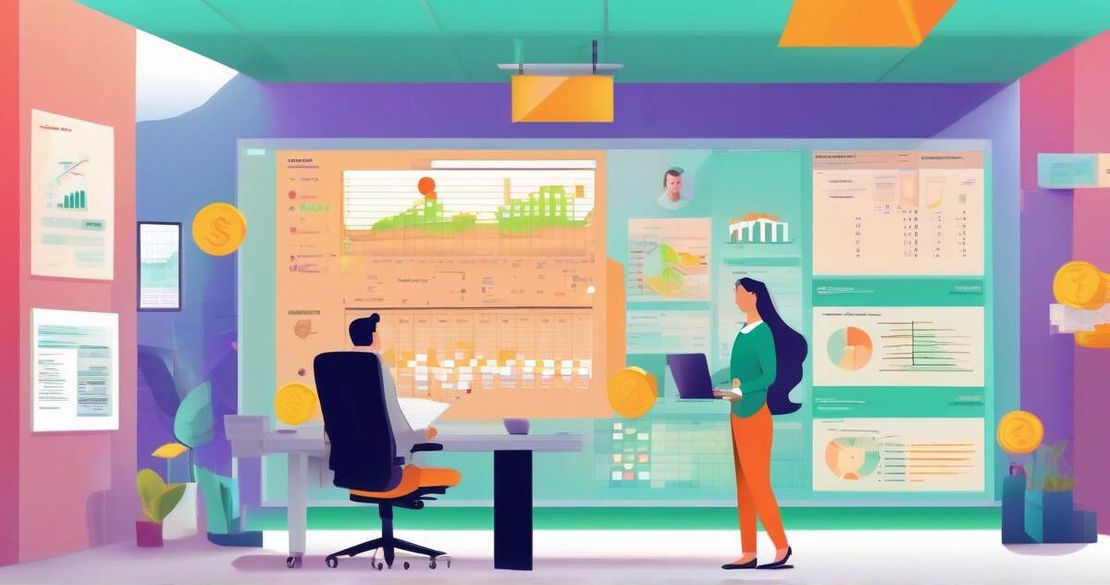
I run my cashflow dashboard financiar—an Excel sheet that pulls data, calculates net cash, and flags negative balances—three times a day. The dashboard financiar shows me whether the day’s cash inflow will cover the day’s outflow. If the numbers turn negative, I know I need to pause a non-essential expense or push for an early payment. CNBC – Cash Flow Monitoring Dashboard (2021).
I use conditional formatting: red indicates a potential cash crunch, yellow a warning, and green a healthy buffer. By the end of each day I can answer a simple question: “Can I pay tomorrow?” If the answer is no, I act immediately.
Proces de recuperare a creanțelor
When I do have to chase a bad debt, I follow a structured proces de recuperare a creanțelor: send a polite reminder, then a formal notice, then a final demand. If the client still fails, I write off the bad debt as a loss. Investopedia – Bad Debt (2023).
I also keep a separate ledger of potential bad debts so that I can adjust my cashflow forecast and not overestimate the money I expect to receive. That small step prevents me from building a cushion around a number that never arrives.
How to apply it
- Gather your data – sales receipts, bank statements, supplier invoices.
- Set up an Excel dashboard financiar – create columns for date, inflow, outflow, net. Use conditional formatting to flag red numbers. Label each row with a client code and the invoice number so I can trace a missing payment quickly.
- Segment your clients – assign each client to A, B, C, or D. I use a simple scoring system: speed of payment, total volume, and profit margin.
- Write clear payment terms – 5-day payment period, 0.2 % daily penalty after 15 days. Draft a short template and attach it to every invoice.
- Add incentives – offer a 1 % discount if the invoice is paid within the first 5 days.
- Monitor daily – at 8 am, 1 pm, and 5 pm, update the sheet and review the dashboard financier.
- Check the break-even point – if net cash is negative, identify which clients or costs are pulling you down.
- Act on the insights – reduce spend on low-value clients (D), renegotiate terms with B clients, and consider new high-value prospects.
- Implement the proces de recuperare a creanțelor – for any overdue invoices beyond 15 days, send a formal notice and follow up.
- Review and refine – every month, revisit the segmentation criteria and incentive rates.
In practice, I set a monthly review on the 15th. I look at the A clients and see if any of them have slipped to B or C. If so, I reach out immediately with a short call and ask if anything is wrong. That often brings the payment back on track.
Pitfalls & edge cases
- Excel errors: Manual entry can introduce mistakes. Double-check formulas.
- Client backlash: Some clients resent penalties. Communicate the terms upfront and explain why they protect both sides.
- Legal constraints: In sectors like IMOBILIARE or IMM, there may be specific regulations about late fees. Consult a lawyer before setting penalties.
- Incentive cost: If the incentive is too generous, it can erode profit. Keep it modest.
- Cash crunch: Even with monitoring, a sudden spike in expenses can still hurt. Maintain a safety buffer of at least 10 % of monthly expenses.
- Writing off debt: Treat bad debt as a loss in your dashboard financiar; it reduces profit but keeps the dashboard realistic.
- Over-segmentation: Too many categories can dilute focus. Stick to A-D and revisit only if needed.
- Data quality: If your bank feeds are not updated, the dashboard shows stale numbers. Connect your bank API or schedule a daily import to avoid gaps.
- Unplanned cash inflow: A sudden large payment can distort your forecast. Use a rolling 30-day average to smooth out spikes.
Quick FAQ
| Question | Answer |
|---|---|
| How can a business enforce late payment penalties effectively? | Use automated reminders, include penalty clauses in the invoice, and set up a formal notice system that triggers after 15 days. |
| What are the best tools for daily cashflow monitoring? | Excel or Google Sheets for custom dashboard financier; QuickBooks or Xero for automated tracking; dashboard financier can pull data via APIs. |
| How can incentives for on-time payment be structured to maximize cashflow? | Offer a small discount (e.g., 1 %) or a free gift for payment within 5 days; keep it low enough not to hurt margin. |
| How can a firm segment clients into A, B, C, D categories accurately? | Track payment speed, volume, and profitability; assign points; cluster clients; review quarterly. |
| What are the legal steps to remove dead or problematic clients (category D)? | Issue a formal notice, cancel the contract if allowed, and settle any outstanding obligations; consult legal counsel. |
| How can a business adapt its payment terms during a recession? | Tighten terms to 5-day windows, increase penalties, and negotiate better supplier terms to preserve cash. |
| What strategies help focus on high-value clients while reducing time spent on low-value ones? | Automate outreach to A clients, outsource or eliminate C and D clients, and allocate sales time to prospects that match A criteria. |
Conclusion
Cashflow is a battlefield. The 8 steps above are my playbook: monitor daily, segment smartly, enforce terms, and reward early payers. Start small—set up a quick Excel dashboard financier, assign a handful of clients to A, B, C, D, and watch your cash breathe again. If you’re a small business owner, a finance manager, or a startup founder, this is a recipe you can cook right now. If you’re comfortable with the status quo and never feel a single cash drain, then you’re already ahead.