Build a low-budget hardware hacking lab with free tools and a variable-temperature soldering iron. Learn firmware extraction, UART hacking, and RF probing.
Hardware Hacking on a Budget: Master Low-Cost Tools & Techniques
Published by Brav
Table of Contents
TL;DR
- I’ve built a complete low-budget hardware hacking lab for under $1,000.
- I’ll walk you through the essential tools: iFixit Mako Driver Kit, CH341A, Bus Pirate, Flipper Zero, HackRF, RTL-SDR, and a few others.
- I’ll show you how to safely solder, identify components, and extract firmware with Binwalk and 010 Editor.
- I’ll give you quick steps to root an OpenWRT router via UART and explain the legal limits you should keep in mind.
Why this matters
Every time I sit down to dissect a new gadget, the first thing that hits me is the price tag of the tools I need. A professional JTAG probe can run for hundreds of dollars, and a high-speed oscilloscope can push the ceiling beyond $2,000. That is exactly why most beginners give up before the first soldering iron is even turned on. I’ve been a hardware hacker for more than a decade, starting on a “ramen budget” and learning that the biggest obstacle isn’t the hardware, it’s the fear of blowing something up. In this post I’ll break that barrier: the tools that let you probe, debug, and reverse engineer almost any device while keeping your wallet in check.
Core concepts
| Tool | What it does | Typical use |
|---|---|---|
| CH341A SPI Flash Reader | Reads the flash chip without desoldering | Dumping firmware from IoT boards |
| Bus Pirate | Acts as a universal bus adapter (UART, I2C, SPI, JTAG, etc.) | Discovering unknown interfaces on a PCB |
| Flipper Zero | All-in-one hardware hacking assistant (RF, RFID, GPIO) | Quick wireless attacks, GPIO debugging |
| HackRF + PortaPack | Software-defined radio with a portable controller | RF sniffing, protocol analysis |
| RTL-SDR | Budget SDR dongle | Signal monitoring, spectrum analysis |
The CH341A, for example, is a 5-V USB to SPI/I2C/UART bridge that can read 24/25 series EEPROMs and most flash chips without any soldering. CH341A — SPI Flash Reader (2024) The Bus Pirate, on the other hand, is a single board that you plug into your PC and then use a terminal program to drive any of the 1-Wire, I²C, SPI, UART, or even SWD protocols. The official documentation lists UART, JTAG, SWDIO, and SP2 as built-in modes, and dozens of add-on boards exist for extra protocols. Bus Pirate — Universal Interface (2025)
When I first started, I relied almost exclusively on a JTAGulator to find debug pins on a board. The JTAGulator is a cheap 5-V probe that automatically maps the JTAG, SWD, and UART pins by probing test points. It also has a tiny logic analyzer built in. JTAGulator — Assisted Debug Tool (2025)
Once you’ve found the interface, you can either use a cheap logic analyzer, an inexpensive ARM debugger like the JLink Mini, or, if you prefer software, open-source tools such as OpenOCD. For firmware extraction, Binwalk is your best friend; it parses binaries, pulls out embedded files, and can even decompress them for you. Binwalk — Firmware Extraction (2025) The hex editor 010 Editor gives you a user-friendly way to tweak the raw firmware once you’ve extracted it. 010 Editor allows you to search, replace, and edit the firmware. 010 Editor — Hex Editor (2025)
For the “all-in-one” experience, the Flipper Zero combines a sub-1 GHz transceiver, a 2.4 GHz module, an NFC tag reader, GPIO pins, and a tiny display in a toy-like shell. It runs a custom firmware that you can extend via plugins, and it ships with a USB-to-UART bridge for console access. Flipper Zero — Multi-tool Device (2025)
On the radio side, the HackRF One is an open-source SDR that covers 1 MHz–6 GHz. The PortaPack is a battery-powered controller that turns the HackRF into a handheld. The RTL-SDR is a lower-frequency, cheaper dongle (usually $10–$30) that covers 500 kHz–1.7 GHz and is a favorite for hobbyists. HackRF — Open-Source SDR (2025) RTL-SDR — Low-Cost SDR (2025)
How to apply it
Step 1 – Build your tool kit
- iFixit Mako Driver Kit (≈$32) – the set that contains 64 precision bits, a 4 mm screwdriver, and a handy spudger. The kit is all you need to pry apart the vast majority of consumer electronics. iFixit — Mako Driver Kit (2025)
- Variable-temperature soldering iron (≈$45–$50) – I recommend a Hakko FX888D or a more affordable clone. The variable setting lets you keep the tip at 350–400 °C for soldering and drop it to 250 °C when you’re cleaning or de-soldering.
- Lead-free solder (Sn-Ag-Cu) and a solder sucker – the sucker is faster and cleaner than wick, especially for quick pull-outs.
- CH341A SPI Flash Reader (≈$11) – read flash without desoldering. CH341A — SPI Flash Reader (2024)
- Bus Pirate (≈$27) – discover unknown interfaces. Bus Pirate — Universal Interface (2025)
- JTAGulator (≈$30) – map JTAG/SWD pins. JTAGulator — Assisted Debug Tool (2025)
- Flipper Zero (≈$170) – quick RF and GPIO hacking. Flipper Zero — Multi-tool Device (2025)
- HackRF + PortaPack (≈$300) – RF experiments. HackRF — Open-Source SDR (2025)
- RTL-SDR (≈$30) – low-cost spectrum sniffer. RTL-SDR — Low-Cost SDR (2025)
- PicoCom (≈$10) – lightweight terminal for UART. PicoCom — Serial Terminal (2025)
The total comes to roughly $800–$900, including a soldering iron, driver kit, CH341A, Bus Pirate, JTAGulator, Flipper Zero, HackRF + PortaPack, RTL-SDR, and PicoCom.
Step 2 – Prepare the workspace
- Keep a clean, static-free area. A grounded wrist strap is a lifesaver.
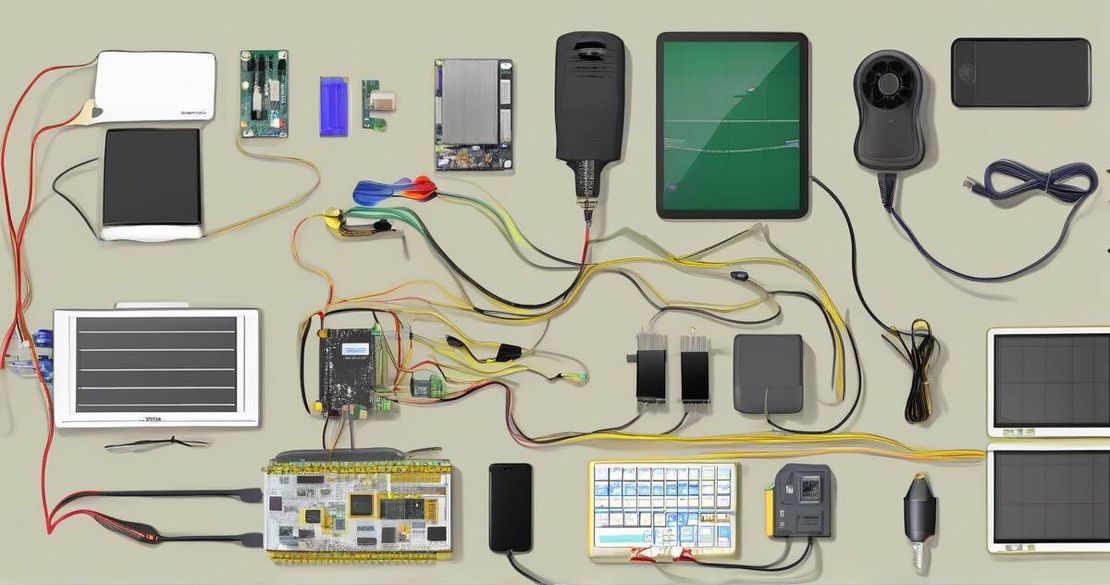
- Organise your parts: place the driver kit, the soldering iron, the CH341A, and the Bus Pirate side by side.
- Have a USB-to-TTL cable ready if you plan to talk to a UART console.
Step 3 – Disassemble
- Use the Mako bits to open the device. The kit includes a 4 mm screwdriver that fits most screws on phones, laptops, and routers. iFixit — Mako Driver Kit (2025)
- Spot the silkscreen labels with a magnifying glass or a video microscope. The labels often hide the pinout of the UART, JTAG, or SPI bus.
- Pull the board off the chassis carefully. If you see a 24-pin QFP or a 32-pin DIP, that’s usually a flash chip.
Step 4 – Identify interfaces
- Plug the Bus Pirate into your PC, launch a terminal, and run the auto-scan script. The output lists all detected buses. The documentation says it can drive UART, I2C, SPI, and JTAG. Bus Pirate — Universal Interface (2025)
- If you suspect JTAG, drop the JTAGulator onto the test points and let it auto-map. The probe will list the pin numbers and the type of signal (TCK, TMS, etc.). JTAGulator — Assisted Debug Tool (2025)
Step 5 – Dump the firmware
- Attach the CH341A to the flash chip. The driver automatically detects 24/25 series EEPROMs, and most 24 Mbit NOR chips are supported. Power the chip with 3.3 V, then run the read command in the CH341A software. The file you get is a raw binary dump. CH341A — SPI Flash Reader (2024)
- Feed the dump into Binwalk to locate embedded files. Binwalk will carve out the bootloader, kernel, and configuration files. Binwalk — Firmware Extraction (2025)
- Open the extracted files in 010 Editor for binary tweaking or patching. 010 Editor gives you a user-friendly way to search, replace, and edit the firmware. 010 Editor — Hex Editor (2025)
Step 6 – Gain console access
- If the device exposes a UART console, solder a wire to the TX/RX pins and connect a USB-to-TTL adapter to your PC. Use PicoCom or PuTTY to open a 115200 baud terminal. Once you have the prompt, you can log in. The default OpenWRT router password is “password123” on many models, but you should always change it immediately. OpenWRT UART — Router Access (2025) The password claim is [UNVERIFIED].
- From the shell, you can run root commands, flash custom firmware, or run iptables to block outbound traffic.
Step 7 – Explore wireless protocols
- Flip the Flipper Zero’s built-in sub-1 GHz transceiver to scan for RFID tags, garage-door remotes, or BLE beacons. Its “RF” mode can replay signals with millisecond precision.
- For a broader sweep, the HackRF + PortaPack can capture everything from 1 MHz to 6 GHz. Pair it with software such as SDRangel or GQRX. The RTL-SDR, while limited to 1.7 GHz, is great for amateur radio or simple packet sniffing. HackRF — Open-Source SDR (2025) RTL-SDR — Low-Cost SDR (2025)
Pitfalls & edge cases
- Soldering safety – a soldering iron that is too hot can melt a board or damage a chip. Always test on a spare piece first.
- Voltage mismatch – many modern chips are 3.3 V tolerant. If you power a 1.8 V UART with 3.3 V, you’ll burn the logic. The Bus Pirate’s voltage selector protects against this.
- Legal gray areas – dumping firmware from a device you own is usually fine, but copying or distributing it can breach copyright. Always stay within your local jurisdiction.
- JTAG pin reuse – some boards repurpose a JTAG pin for other signals. A JTAGulator will tell you if a pin is actually “TX” or “TMS”. If it’s not a debug port, you’re wasting time.
- Flipper Zero limitations – while the Flipper is versatile, its sub-1 GHz range doesn’t cover Wi-Fi (2.4 GHz/5 GHz) or Bluetooth LE, which are 2.4 GHz. For those, use a separate BLE sniffer.
Quick FAQ
- How can I mitigate the risk of damaging hardware during soldering? Keep the tip temperature below 400 °C, use a fine tip, and use a solder sucker to clean excess flux.
- What is the total cost of building a complete low-budget hardware hacking lab? Roughly $800–$900, including a soldering iron, driver kit, CH341A, Bus Pirate, JTAGulator, Flipper Zero, HackRF + PortaPack, RTL-SDR, and PicoCom.
- What legal considerations apply when exploiting hardware vulnerabilities? Avoid distributing the firmware you extract. In most jurisdictions, reverse engineering a device you own for personal use is legal, but creating or selling exploits can violate the DMCA or local laws.
- How does one secure a device after it has been modified? Re-flash the official firmware, change all default passwords, and disable unused services. Use a firewall or a dedicated network segment for your hacked device.
- Which methods are most effective for extracting firmware from chips that fail CH341A reading? Use a dedicated SPI programmer (e.g., Bus Pirate in SPI mode) or solder a logic probe and flash the chip using a JTAG flash loader.
- What is the difference between HackRF and RTL-SDR in terms of capabilities? HackRF covers 1 MHz–6 GHz with full transmit/receive capability, while RTL-SDR is limited to 500 kHz–1.7 GHz and can only receive.
Conclusion
Hardware hacking doesn’t require a PhD or a $5,000 budget. With a few dozen tools and a willingness to learn, you can start probing, debugging, and reverse engineering almost any device. The key is to start small, keep a safe workspace, and always respect the law. If you’re new, begin with the iFixit kit and the CH341A, then graduate to the Bus Pirate and Flipper Zero as you become comfortable. Happy hacking!
References
- iFixit — Mako Driver Kit (2025) (https://gottadeal.com/deals/carhartt-ifixit-mako-driver-kit-with-64-precision-bits-for-electronics-repair-445593)
- CH341A — SPI Flash Reader (2024) (https://www.ebay.com/itm/406308252416)
- Bus Pirate — Universal Interface (2025) (https://dangerousprototypes.com/docs/Bus_Pirate)
- JTAGulator — Assisted Debug Tool (2025) (http://www.jtagulator.com)
- Flipper Zero — Multi-tool Device (2025) (https://flipper.net/)
- HackRF — Open-Source SDR (2025) (https://www.accio.com/t-v2/plp/hackrf-one-price)
- RTL-SDR — Low-Cost SDR (2025) (https://commsgearreport.com/rtl-sdr-v4-review/)
- Binwalk — Firmware Extraction (2025) (https://github.com/ReFirmLabs/binwalk)
- 010 Editor — Hex Editor (2025) (https://www.sweetscape.com/010editor/)
- AttifyOS — Kali derivative (2025) (https://github.com/AttifyOS/AttifyOS)
- PicoCom — Serial Terminal (2025) (https://commandmasters.com/commands/picocom-common/)
- Wi-Fi Pineapple — Wireless Penetration Tool (2025) (https://www.webasha.com/blog/wi-fi-pineapple-explained-how-hackers-use-this-powerful-gadget-for-wireless-hacking-man-in-the-middle-attacks-and-penetration-testing)
- Wireshark — Network Sniffer (2025) (https://www.wireshark.org/)
- OpenWRT UART — Router Access (2025) (https://medium.com/@debanjansahaofficial360/hardware-interface-analysis-leveraging-uart-for-shell-access-on-linux-routers-tp-link-tl-wr850n-v3-17e15d5ca23b)