Discover how a 20-µm micro-LED wireless brain implant offers precise, high-resolution neural stimulation, its potential therapies, and the risks involved.
How a 20-µm LED Wireless Implant Revolutionizes Brain Therapy
Published by Brav
Table of Contents
TL;DR
- A wireless brain implant uses 20-µm micro-LEDs to light-stimulate neurons without wires, enabling precise, high-resolution control.
- Light stimulation avoids the diffusion and heat problems that plague electrical electrodes.
- Near-field inductive coupling powers the device wirelessly, so no battery or external hardware is needed.
- The system can encode sensory information (texture, pressure, temperature) and even higher-level signals, raising both exciting therapeutic possibilities and ethical concerns.
- Key risks include heating, immune response, and potential security or misuse of wireless communication.
Why this matters
I’ve spent the last two decades building and testing neural interfaces. The biggest headache? Trying to get an electrical current to hit just the right group of neurons without spilling into neighbors or heating the tissue. It’s like painting a masterpiece with a splotchy brush. The new wireless light-based implant turns that struggle on its head. By using light that spreads less than current, it offers a centimeter-scale field with micrometer-level precision, which means we can address single neuron populations in a way that was previously impossible. Northwestern University — Scientists create wireless brain implant that uses light to send messages directly to the brain (2025)
Core concepts
Optogenetics is the trick that lets light talk to neurons. The neurons are engineered to express a light-gated ion channel (an opsin), and when a photon hits, the channel opens, ions flow, and the neuron fires. The process is fast—milliseconds—and very selective. Optogenetics — Optogenetics (2025) The new implant places an array of 64 tiny LEDs—each only 20 µm wide—directly on the skull, above the cortex. Northwestern University — Scientists create wireless brain implant that uses light to send messages directly to the brain (2025) Microdisplays — Microdisplays: mini-LED, micro-OLED, and micro-LED (2023) Each LED emits about 10 µW, so the whole chip consumes only a few microwatts—no heating problems. OptoBrain — OptoBrain: A Wireless Sensory Interface for Optogenetics (2025)
Powering the implant is done by near-field inductive coupling. An external coil—about the size of a credit card—generates a time-varying magnetic field. Inside the skull sits a micro-spiral coil wrapped around the LED array. By Faraday’s law, the changing field induces a tiny voltage in the coil, which feeds the LEDs. The entire system is passive—no battery inside the animal. Inductive coupling — Inductive coupling (2025) Faraday’s law — Faraday’s law (2025)
Encoding information: The 64-LED array is like a pixelated LED screen. By pulsing LEDs at different frequencies, we can control perceived intensity. By turning on a subset of LEDs, we paint a spatial pattern, giving the brain a “map” of where to feel. Pulse timing and bursts add texture or rhythm. In a mouse study, the animals learned to distinguish different patterns and used them to solve a maze—proof that the brain can learn to read this artificial language. Northwestern University — Scientists create wireless brain implant that uses light to send messages directly to the brain (2025)
Why light instead of current? Electrical fields spread like a bad Wi-Fi signal in brain tissue because the conductivity varies. Light follows optical refraction and scattering, which keeps the energy more tightly bound. The Rayleigh scattering length in gray matter is on the order of 100 µm, so the light can target a few microns of space. Rayleigh scattering — Rayleigh scattering (2025)
| Parameter | Use case | Limitation |
|---|---|---|
| Electrical stimulation | Deep brain stimulation, pain relief | Current diffuses; heat; requires wires or batteries |
| Light stimulation | Precise, sub-millimeter targeting | Limited depth (~1 mm); requires optical access |
| Wired implant | Stable power, high data rates | Bulky, restricts movement |
| Wireless implant | Fully implanted, untethered | Power limits; potential security risk |
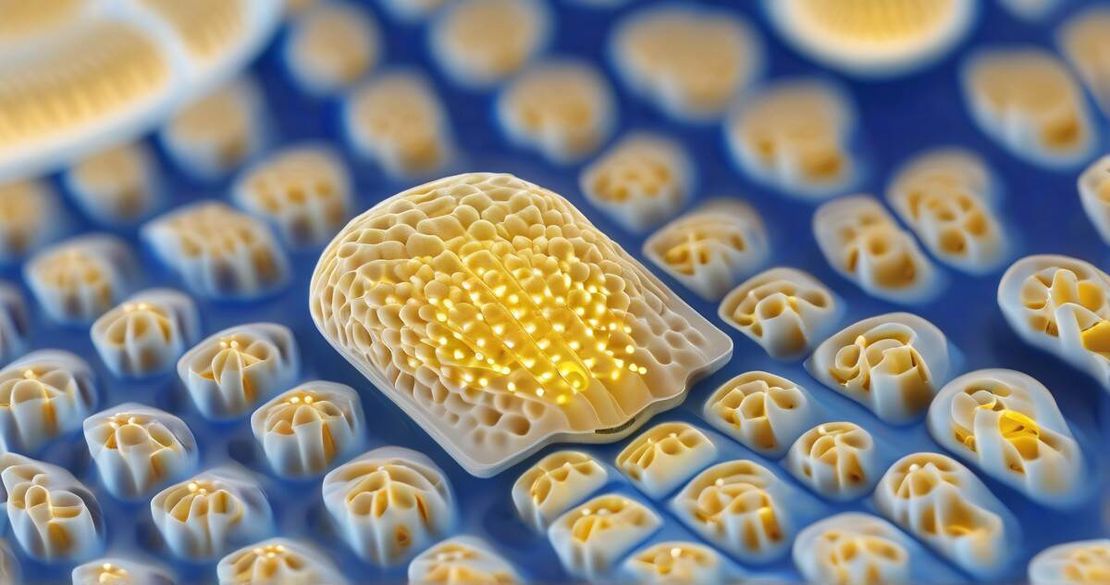
Micro-LED array: 64 LEDs in a 1 mm × 1 mm footprint. Each LED emits ~10 µW, so the whole chip consumes only a few microwatts—no heating problems. The LEDs are made from gallium nitride, a material prized for its brightness and low power.
How to apply it
- Choose a target region. Decide whether you want to stimulate the somatosensory cortex, visual cortex, or a subcortical area.
- Design the LED pattern. Use the 64-LED matrix to encode the spatial map you need. Think of it as drawing a picture on a tiny screen.
- Set the pulse parameters. Frequency for intensity, duty cycle for texture, burst length for rhythm.
- Power the device. Place the external coil near the skull and adjust its current to reach the required field strength. The implant’s micro-coil will harvest the energy.
- Calibrate. Use a small animal model to verify that the patterns produce the expected firing in target neurons. Adjust timing and frequency until the desired response is achieved.
- Monitor safety. Check for heating (thermography), immune response (histology), and device stability over weeks.
Metrics
- LED count: 64
- LED width: 20 µm
- Power consumption: < 10 µW per LED
- Implant size: sub-millimeter
- Depth of effective stimulation: ~1 mm
Pitfalls & edge cases
| Issue | Why it matters | Mitigation |
|---|---|---|
| Heat | Even microwatts can build up in tissue if LEDs are crowded. | Keep duty cycle low; use thermal-sensing feedback. |
| Immune response | The brain may react to foreign material. | Use biocompatible polymers; test with ISO 10993. |
| Wireless hacking | Malicious signals could trigger or block stimulation. | Encrypt power and data; restrict frequency bands. |
| Limited depth | Light doesn’t penetrate deeply, so subcortical targets are hard. | Use near-infrared LEDs or combine with fiber optics. |
| Ethical concerns | Encoding emotions or memories could be abused. | Establish clear consent protocols and oversight. |
Quick FAQ
Q: How does light-based stimulation compare to electrical? A: Light is confined by optical scattering, giving ~1 mm depth with micron precision, while electrical currents spread across centimeters, heating tissue. Rayleigh scattering — Rayleigh scattering (2025) Optogenetics — Optogenetics (2025)
Q: What are the main safety concerns? A: Biocompatibility must meet ISO 10993; heating from LEDs; electromagnetic safety per IEC 60601-1-2. ISO 10993-1 — Biological evaluation of medical devices (2018) IEC 60601-1-2 — Medical device safety standard (2025) Northwestern University — Scientists create wireless brain implant that uses light to send messages directly to the brain (2025)
Q: Can it help with vision loss? A: Yes. The same LED array can be wired to the visual cortex, producing high-resolution visual prostheses. OptoBrain — OptoBrain: A Wireless Sensory Interface for Optogenetics (2025) Northwestern University — Scientists create wireless brain implant that uses light to send messages directly to the brain (2025)
Q: How is the implant powered? A: By near-field inductive coupling; an external coil induces voltage in an implanted micro-coil via Faraday’s law. Inductive coupling — Inductive coupling (2025) Faraday’s law — Faraday’s law (2025)
Q: Does it really work in animals? A: Mice learned to use the LED patterns to navigate a maze, proving the brain can learn to interpret light messages. Northwestern University — Scientists create wireless brain implant that uses light to send messages directly to the brain (2025)
Q: Could the device be used for higher-level functions? A: Theoretically, yes, but the ethical review warns about risks of manipulating emotions or memories. Ethical issues in memory modification technology — Ethical issues in memory modification technology (2024)
Q: How do you encode complex sensations? A: Frequency controls intensity, spatial patterns control location, pulse timing controls texture, bursts encode motion. Northwestern University — Scientists create wireless brain implant that uses light to send messages directly to the brain (2025)
Conclusion
The 20-µm LED wireless brain implant is a game-changer. It removes the tangle of wires and batteries, uses light to hit neurons precisely, and opens doors to sensory prostheses, pain relief, and even neural-circuit repair for spinal cord injury. The road ahead is clear: we need rigorous biocompatibility tests, secure wireless protocols, and ethical frameworks to govern how we use this power. If we keep safety and consent front and center, this tiny device could bring a new era of brain-based therapies.