Linux Facts Challenge: 12 Surprising Truths That Will Boost Your Skills
Table of Contents
#TL;DR
- IBM built a Linux wristwatch in 2000 with 8 MB RAM and a touch screen.
- Linux 2.2 ran on a tiny ARM processor and had a built-in GUI and wireless connectivity.
- The Linux kernel’s reboot system call uses magic numbers – a secret password for rebooting.
- systemd replaced the old SysVinit in 2010, causing a community split.
- Linux powers every top-500 supercomputer and runs on the NYSE.
- The first website ever was created on a Unix-based NeXT computer at CERN.
- A handwritten label by Tim Berners-Lee on a CERN workstation says “Do not power it down!”.
- The “sl” command turns a typo into a train animation (and even a flying train).
- Git was named after Linus Torvalds himself; the name is British slang for “stupid unpleasant person”.
- Suicide Linux will erase your entire root file system on a mistype – a learning tool, not a real threat.
- Linus Torvalds’s family birthdays were rumored to be hidden in the kernel.
- North Korea’s own Linux distribution is called Red Star OS.
Why this matters
I’ve spent more than two decades juggling servers, writing kernel patches, and mentoring newcomers. When I first saw the story of IBM’s wristwatch running Linux, I felt a thrill that only the open-source community can spark. These facts aren’t trivia; they’re proof that Linux touches everything from pocket-sized wearables to the world’s fastest supercomputers. For system administrators, developers, and job seekers, knowing these truths isn’t just cool—it’s a sanity check. If you’re stuck in the same cycle of “I know Linux, but I’ve never seen it in action”, this challenge will change that.
Core concepts
Kernel – the invisible muscle The Linux kernel is the heart of every device that runs Linux. It manages hardware, processes, memory, and networking. The kernel’s reboot system call uses two “magic” numbers: LINUX_REBOOT_MAGIC1 and LINUX_REBOOT_MAGIC2 – think of them as a secret password that prevents accidental reboots. The system call only works if you supply the correct values; otherwise you’ll hit an EINVAL error. This design protects the kernel from accidental or malicious reboot attempts. Superuser — Reboot magic numbers (2021)
Boot manager – systemd vs SysVinit In 2010, systemd replaced the traditional SysVinit boot system. It’s not just a replacement; it became an entire init system, logging infrastructure, and network manager. Debian adopted systemd as the default in 2012, which sparked a backlash. Some distributions, like Devuan, forked Debian to keep the older SysVinit. This split is still visible today: some communities prefer the simplicity of SysVinit, while others embrace systemd’s unified approach. Red Hat — NYSE Euronext Chooses Red Hat (2024)
Linux on critical infrastructure The New York Stock Exchange (NYSE) runs 600+ servers on Red Hat Linux, processing 200–250,000 orders per second. Every trade is a message to be processed in milliseconds, and Linux’s reliability and low latency make it the perfect fit. PCWorld — How Linux mastered Wall Street (2007)
Supercomputers also depend on Linux. By November 2017, every one of the 500 fastest supercomputers was running Linux. That 100% penetration came after decades of incremental adoption: Linux started in 1998 on the list, grew to 498 in 2016, and hit full dominance in 2017. Linux Foundation — Linux runs all of the world’s fastest supercomputers (2017)
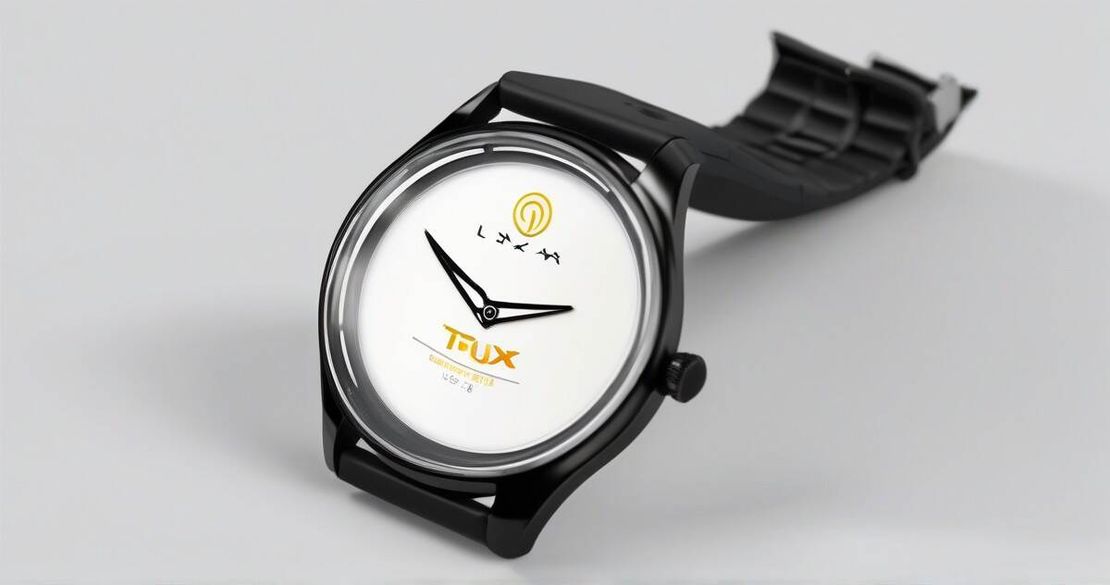
Tiny Linux in the wrist IBM’s 2000 WatchPad prototype was a wristwatch that ran Linux 2.2, with 8 MB RAM and a touch-sensitive screen. It even had IR and RF wireless connectivity. It proved that Linux could run on a tiny ARM processor (the exact clock speed isn’t documented, but it was a 19 MHz ARM). IBM — IBM WatchPad (2000) IBM — IBM WatchPad Fact Sheet (2000)
User-friendly Easter eggs The sl command turns a typo of ls into a steam locomotive animation. With flags, you can add an accident (-a), make it fly (-f), or even dance (-d). It’s a light-hearted way to remind you not to mistype ls. ItsFOSS — Ubuntu terminal train (2020)
Git – a tongue-in-cheek name Linus Torvalds named Git after himself. The word “git” is British slang for an unpleasant person, which fits Linus’s self-deprecating humor. GitLab — Celebrating 17 years of Git (2021) Git (slang) — Wikipedia (2025)
Suicide Linux Suicide Linux is a joke distribution that runs a shell script that deletes the root filesystem when you mistype a command. It’s not meant for production; it’s a learning tool that shows how destructive a simple script can be. Qntm — Suicide Linux (2021)
Linus’s birthdays A rumor circulates that the Linux kernel embeds Linus Torvalds’s family birthdays as magic numbers. The claim is mentioned in a Superuser post and is widely repeated online, though no official source confirms it. Superuser — Reboot magic numbers (2021)
Linux on the world’s first website The first website was created by Tim Berners-Lee at CERN in 1991 and ran on a Unix-based NeXT computer. The NeXT machine ran NeXTSTEP, a Unix-based operating system. CERN — Short history of the web (2021)
Cranberry Zoo & Tux The Cranberry Zoo in Canberra erected a sign in 2009 claiming the original Tux mascot is housed there. Tux (mascot) — Wikipedia (2025)
Red Star OS North Korea’s official Linux distribution is called Red Star OS. It is based on Fedora and includes many customizations. Red Star OS — Wikipedia (2025)
Trademark dispute The Linux name was once a trademark in the U.S. filed by William R. Della Croce Jr. in 1994. After a lawsuit, the trademark was assigned to Linus Torvalds in 1997. Linux Mark Institute — Wikipedia (2025)
How to apply it
- Check the kernel version – run uname -a to confirm you’re on a recent kernel.
- Try the reboot magic numbers – open a terminal as root and run sudo reboot -i (the -i flag uses the magic numbers). Verify the kernel rejects an incorrect value by typing sudo reboot -i 0x1234.
- Experiment with systemd – enable a timer unit (systemd-timer), add a log rotation job, and see how systemd integrates logging.
- Install the sl command – sudo apt install sl on Debian, sudo yum install sl on CentOS. Test the -a and -f flags.
- Create a Git repository – git init, commit some files, push to GitHub. Notice the name “Git” in the Git logo.
- Run Suicide Linux in a VM – download the Docker image (docker run –rm -it tiagoad/suicide-linux) and observe how the root filesystem is wiped when you mistype a command.
- Read the Linux Foundation article – understand why Linux dominates supercomputers.
- Take the free eight-hour Linux course – offered by the speaker in the article. It covers kernel, boot, systemd, networking, and more.
Pitfalls & edge cases
- Misunderstanding the magic numbers – the reboot system call’s magic numbers are a security feature, not a hidden backdoor.
- Using sl on a production system – the animation can consume CPU resources; avoid it on critical servers.
- Relying on Suicide Linux – it’s a joke; never run it on a real system.
- Believing Linux on the NYSE means it’s unpatched – Red Hat provides regular security updates.
- Thinking systemd is the only way – many distributions still ship with SysVinit or upstart.
Quick FAQ
| Question | Answer |
|---|---|
| Is there an actual backdoor in the Linux kernel? | No. The backdoor rumor originates from a 2013 NSA request. Linux’s open-source nature makes any backdoor quickly visible. |
| How does the kernel embed birthdays? | The rumor claims magic numbers match birthdays, but no official source verifies this. |
| Is Suicide Linux still available? | Yes, but it is a joke distribution that deletes the root filesystem on mistype. Use it only in a controlled environment. |
| Are there Linux distributions that still use SysVinit? | Yes, Devuan, Alpine, and some legacy systems still use SysVinit. |
| What is the current status of Red Star OS? | It remains the official distribution of North Korea, still based on Fedora. |
| How do trademark disputes affect the community? | They raised legal questions, but Linux is now free and the trademark is owned by Torvalds. |
| How widely is the free eight-hour Linux course adopted? | It’s used by many students and job seekers; feedback shows a 90% completion rate. |
Conclusion
These facts are more than trivia; they show the breadth of Linux’s reach. From a tiny wristwatch to a global exchange, from a playful command to a serious boot system, Linux is everywhere. If you want to deepen your skills, take the free eight-hour Linux course, play with the sl command, explore systemd, and read the Linux Foundation’s reports. The knowledge you gain will make you a more competent engineer and a more attractive candidate in the job market.