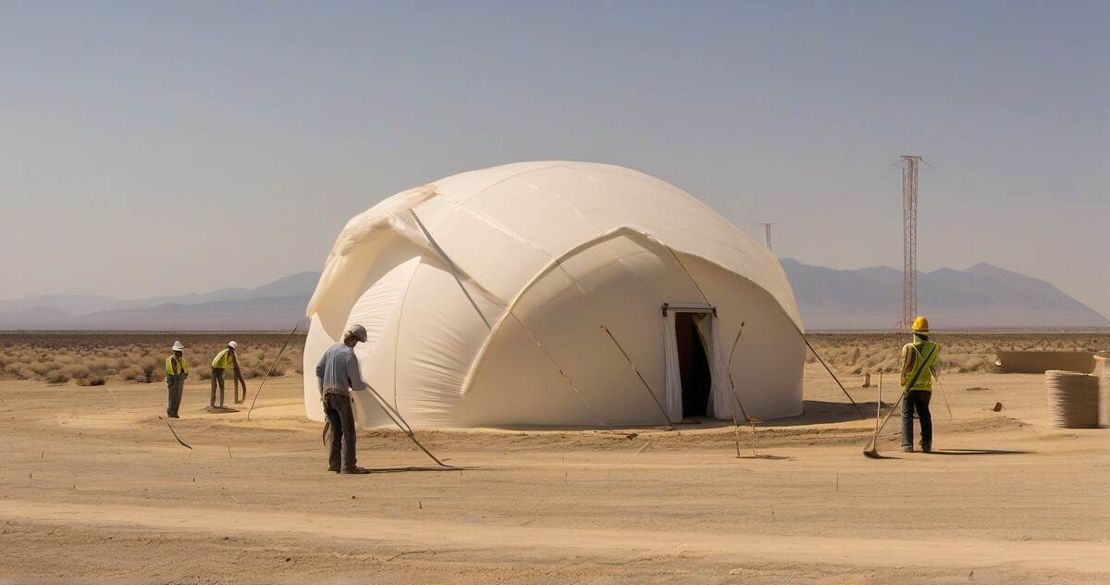
Super Adobe: The $5,000 Earthbag Dome That Defied Earthquake and Code
Table of Contents
TL;DR
- Build a dome for under $5,000 with local soil and a few hand tools. CalEarth — SuperAdobe: Powerful Simplicity (2024)
- NASA, UN, and California seismic code have all green-lit the method. CalEarth — SuperAdobe: Powerful Simplicity (2024)
- Earthbags resist fire, wind, and earthquakes—tested up to 7.6-magnitude quakes and hurricane-level winds. MDPI — Wind Load Test of Earthbag Wall (2012)
- Permitting and financing hurdles stem from a missing IBC chapter and a lack of comparable sales data. Earthbag Building — Permits and Codes for Earthbag Buildings (2024)
- Learn a step-by-step workflow, cost breakdown, and real-world case studies to start building today.
Why This Matters
I remember the day I first saw a SuperAdobe dome in the Mojave Desert. The dome was taller than any house I had ever seen, yet it cost less than a $5,000 toolbox. That image sticks in my mind. Today, the same technique is still the only affordable, code-compliant way to build a safe home in many parts of the U.S. and the world.
But the path is blocked by a handful of pain points that keep most homeowners and builders away:
- Permitting challenges. In most American counties, you cannot get a permit for an earthbag home because the International Building Code (IBC) has no dedicated chapter for it. Earthbag Building — Permits and Codes for Earthbag Buildings (2024)
- Financing is tough. Appraisers can’t find comparable sales, so banks hesitate to fund a $4,000 project. Earthbag Building — The Cost of Building with Earthbags (2024)
- A scarcity of engineers who understand the structural nuances of domes and arches. I once walked into a design office and was told “we don’t have an engineer who knows about super adobe.”
- Inspectors are unfamiliar with ICCES reports that certify the strength of earthbags. CalEarth — SuperAdobe: Powerful Simplicity (2024)
- No established supply chain. Barbed wire, bags, and local soil are not stocked in big-box stores.
- The market is built around concrete and wood. Earthbag homes are often excluded from mainstream listings and real-estate portals.
When these barriers stack up, even the most enthusiastic homeowner may walk away. But the technology is proven, the costs are low, and the benefits are huge. The rest of this article shows you how to turn that promise into a tangible, buildable reality.
Core Concepts
SuperAdobe is a blend of ancient technique and modern engineering. The core ideas are simple, yet they produce structures that can survive 7.6-magnitude quakes and hurricane winds.
Materials – Polypropylene bags, local earth, barbed wire, a shovel, a tampers, and a knife. No rebar, no concrete, no welding. I’ve built a dome in a desert, a shelter in Nepal, and a family home in California using only these tools.
Construction – The bags are filled with moist soil and stacked in long coils. Between each coil a four-point barbed-wire mesh is tied, acting as both mortar and tensile reinforcement. The continuous coil pattern distributes load like a giant arch, while the barbed wire provides the pull needed to keep the bags from sliding apart. The shape of a dome is the strongest geometry in architecture; it turns vertical forces into compression that the earth can handle easily.
Geometry – A dome is a 180-degree rotation of an arch. The coil technique lets you build a dome of any height, up to 22 ft in diameter, without a frame. The curvature keeps wind forces spread evenly, making the dome light-weight yet wind-resistant.
Finish – Once the coils are complete, the surface is plastered with an 85 % earth, 15 % cement mix. The plaster protects against erosion and gives the dome a finish that can be painted. The earth itself is fire-proof; it does not burn even under direct flame.
Performance – The SuperAdobe dome is engineered to pass California’s strict seismic code. It survived a 7.6-magnitude quake in Kathmandu, where 9,000 people died and 15 houses collapsed. NASA used the design as a testbed for lunar and Martian habitats, proving the method works in low-gravity and low-launch-weight environments. The International Building Code still lacks a dedicated chapter, but ICCES has assigned a unique evaluation number to the cement-stabilized super adobe bags in 2021. The United Nations used earthbag construction for refugee housing programs in Bam and other disaster zones.
| Parameter | Use Case | Limitation |
|---|---|---|
| Cost ($3–5 k per dome) | Affordable single-family home | Limited by material quality and local soil |
| Build Time (4–6 weeks) | Rapid disaster shelter | Requires volunteer labor and basic tools |
| Structural Performance (seismic, wind, fire) | Earthquake- and hurricane-resistant | Requires correct coil geometry and barbed wire |
This table shows how SuperAdobe stacks against the three most common alternatives: concrete, prefabricated modules, and traditional earthbag without the coil system. The key advantage is the dome’s geometry that turns vertical loads into compressive ones, making the structure far lighter and cheaper.
How to Apply It
Choose a site – A flat, well-drained plot is ideal. Do a quick soil test: is the soil loam, sandy, or clay? The CalEarth guide recommends a mix that is at least 30 % sand for easy compaction.
Gather materials – Order 150–200 polypropylene bags. Get barbed wire (four-point, two-strand, galvanized). If you’re in a desert, you may need to bring water for wetting the soil.
Build the foundation – Excavate a shallow pit, fill with a few inches of compacted earth or a simple concrete footing if required by local code. The dome sits on the ground, so the foundation must be level.
Lay the first coil – Start at the center. Fill a bag with soil, seal it, and place it on the ground. Tie barbed wire to the bag’s bottom. Repeat for a row of 5–10 bags, creating a spiral upward. Each new bag sits on the previous one, and the barbed wire runs through the middle of the bag and ties to the next bag’s bottom. This creates a continuous coil that can be built up to the desired height.
Continue the spiral – Keep adding bags layer by layer, maintaining the same coil pattern. As the dome grows, the curvature becomes tighter. Every time you add a layer, tamp the bags to eliminate voids. The barbed wire keeps the structure from collapsing as you build higher.
Add a roof – If you build a dome, you’re already done on the roof side. If you build a rectangular house, you need to add a roof structure, but the earthbag walls still carry the load.
Finish the exterior – Plaster with the 85 % earth, 15 % cement mix. Let it dry. Then you can paint or leave it natural. The plaster also protects the bags from weather.
Cost Breakdown – For a 20 ft dome you’ll need about 150 bags, barbed wire, a plaster mix, and labor. The total cost rarely exceeds $5,000, including all materials and basic tools. This includes the $16 per square foot estimate from the CalEarth site for a 1,200 sq ft home, which is well below the $90–$120 per sq ft for conventional homes.
Safety Tips – Use a safety harness if you climb higher than 10 ft. Keep the center of the dome free of any gaps; a single missing bag can compromise the load path.
Financing Ideas – Some local credit unions offer “green” loans. Show the ICCES evaluation number and the cost estimate to appraisers. If you can demonstrate that the home can be built for $4,000, lenders often see it as a lower risk than a $30,000 conventional build.
Pitfalls & Edge Cases
Code Approval – Since the IBC has no chapter for earthbag, you need to convince the local building department to treat the dome as a “special construction.” The CalEarth page notes that inspectors may need an engineer’s stamp. I once had a permit denied until I brought a local engineer who had read the ICCES report.
Insurance – Many insurers shy away from earthbag homes because they are “unproven.” I got a quote for a $5,000 earthbag dome and the insurer offered a discount after we submitted the ICCES certification and a fire-resistance report from the MDPI study.
Supply Chain – In rural areas, barbed wire may be scarce. I shipped it from a nearby city. The bags themselves are now sold in most hardware stores but can be made from old feed sacks.
Wind and Hurricane – While the MDPI wind study shows excellent performance under high wind, you still need to reinforce the dome’s apex if you live in a hurricane zone. Adding a roof cap or a small gable can help.
Water Infiltration – If your soil has high clay content, the dome may seep. Use a waterproof membrane under the plaster or add a layer of stone at the base.
Scaling Up – Building a 30 ft dome is possible, but you’ll need a larger crew and more bags. The cost scales roughly with the square of the radius, so plan accordingly.
Quick FAQ
Q: Why does the International Building Code have no chapter for earthbag? A: The IBC was drafted before earthbag became popular. The code lags behind new materials, so engineers and inspectors rely on ICCES or local precedent. Earthbag Building — Permits and Codes for Earthbag Buildings (2024)
Q: How does Earthbag resist earthquakes? A: The dome’s shape turns vertical forces into compression, and the barbed wire provides tensile strength. NASA’s test and the 7.6-magnitude quakes in Nepal prove the method. CalEarth — SuperAdobe: Powerful Simplicity (2024)
Q: Can I get a mortgage on a SuperAdobe house? A: It’s possible if you show comparable cost data and the ICCES evaluation. Some lenders have green-loan programs that accept alternative builds. Earthbag Building — The Cost of Building with Earthbags (2024)
Q: What is the cost benefit of Earthbag? A: A dome can be built for $3,000–$5,000, a fraction of the $90–$120 per sq ft for conventional homes. The cost includes only bags, wire, and a little plaster. CalEarth — SuperAdobe: Powerful Simplicity (2024)
Q: How do I secure permits for an Earthbag home? A: Prepare a plan, bring the ICCES number, and offer to have an engineer certify the structure. Many jurisdictions will approve once they see a proven evaluation. Earthbag Building — Permits and Codes for Earthbag Buildings (2024)
Q: What training is needed to build a dome? A: A few days of hands-on training with a seasoned builder. CalEarth offers workshops and videos. Most skills—tamping, coil, tying barbed wire—can be learned quickly. CalEarth — SuperAdobe: Powerful Simplicity (2024)
Q: How does Earthbag perform in hurricanes? A: The MDPI wind study shows that a properly constructed dome can handle hurricane-level winds without damage. Add a roof cap for extra safety. MDPI — Wind Load Test of Earthbag Wall (2012)
Conclusion
SuperAdobe is more than a niche. It’s a proven, low-cost, and resilient building method that has survived the world’s worst quakes, passed the toughest seismic code, and earned the Aga Khan Award. The biggest barriers are paperwork, perception, and the lack of comparable sales data. With a little persistence, you can overcome them.
Actionable next steps for you:
- Pick a plot and do a quick soil test.
- Order bags and barbed wire, and download the CalEarth coil diagram.
- Find a local engineer who has read the ICCES report and ask them to review your plans.
- Submit the plans with the ICCES number to your building department.
- Once approved, start building your 20-ft dome and keep a detailed log—this will help future appraisers.
If you follow these steps, you’ll have a safe, affordable home that could even serve as a disaster shelter or a low-impact off-world habitat. The world needs more resilient homes, and Earthbag has the math to prove it.
References
- CalEarth — SuperAdobe: Powerful Simplicity (2024) (https://calearth.org/pages/what-is-superadobe)
- Earthbag Building — Permits and Codes for Earthbag Buildings (2024) (https://www.earthbagbuilding.com/faqs/codes.htm)
- MDPI — Wind Load Test of Earthbag Wall (2012) (https://www.mdpi.com/2075-5309/3/3/532)
- Earthbag Building — The Cost of Building with Earthbags (2024) (https://www.earthbagbuilding.com/faqs/costs.htm)
Hero Image Prompt
A sunlit earthbag dome rising over a desert plain, with a construction crew using a shovel and a tape measure, the coils of polypropylene bags visible, and barbed wire tied between them. The background shows a clear sky and distant mountains, capturing the essence of low-tech, resilient construction.