Explore how Faraday waves and cymoscopes turn water into a living analog computer, revealing morphogenesis and offering intuitive, process-oriented insights.
TL;DR:
Published by Brav
Table of Contents
- Faraday waves turn any shallow water surface into a living analog computer.
- A cymoscope lets you see the choreography of standing waves at 50–200 Hz.
- Hydrodynamic models of chickpea pods translate biology into fluid physics.
- Analog computing offers intuitive, process-oriented insight where digital models lag.
- I recommend building a simple cymoscope and a water-integrator for research labs.
Why this matters
When I began my PhD in plant physiology, I found that every digital model I ran flattened the continuous rhythm of seed development into a grid of numbers. Digital computers are great at crunching equations, but they lose the flow of waves that actually drive morphogenesis. By re-introducing water and vibration into the equation, we can build systems that generate the process we want to observe, not just measure it. This shift restores the missing link between biology and physics, offering a new playground where scientists can feel, see, and quantify the invisible forces that shape life.
Core concepts
Analog Computing 101
Analog computers encode variables as continuously varying quantities—voltage, pressure, or water level—mirroring the mathematics they solve Analog Computer — Wikipedia (n.d.). Unlike a digital machine that chops data into bits, an analog device creates the very process it simulates. The Water Integrator, built in 1936 by Vladimir Sergeevich, was one of the first liquid computers to perform real-time integration, proving that water can indeed compute Water Integrator — Wikipedia (n.d.).
Faraday Waves: the Ocean in a Petri Dish
A Faraday wave is a standing wave that appears on a fluid surface when vibrated vertically Michael Faraday — Faraday wave (1831). In a cymoscope, a 2 cm container is driven between 50 and 200 Hz, producing six- to twenty-fold symmetry at specific frequencies John Stuart Reid — Cymoscope (2024). The patterns are governed by Bessel functions of the first kind, allowing us to predict the frequency at which a particular symmetry will lock in Bessel Functions — Wikipedia (n.d.).
Hydrodynamic Models of Pod Set
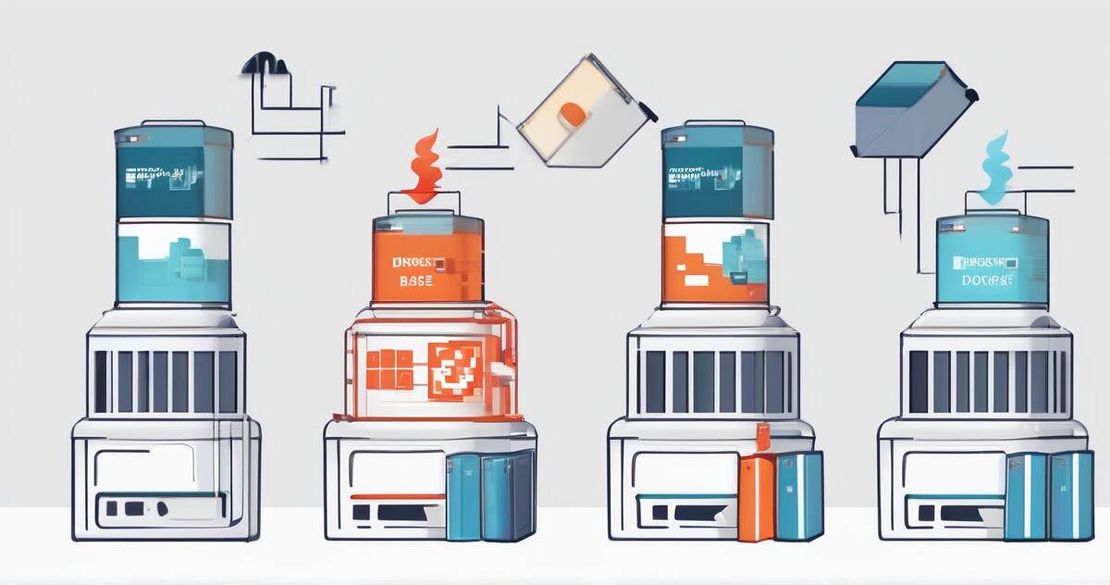
Sheldrake’s hydrodynamic model treats the pod as a fluid reservoir and the seed as a siphon that activates when a threshold is reached. By building a simple circuit of rubber tubing and bicycle inner tubes, we can observe how rising water levels translate into seed weight and timing, reproducing the trend that chickpea pods weigh less as pod number increases while pigeonpeas maintain a constant weight per seed Rupert Sheldrake — Hydrodynamic Model of Pod Set (1979).
Moniac Computer: Analog Fiscal Modeling
Bill Phillips’s Moniac uses reservoirs, valves, and tubes to model macro-economics in real time. The water level in each reservoir represents the money supply, valves act as taxes, and the flow of water simulates money circulation Bill Phillips — Moniac (1971). Watching the fluid dynamics offers intuition that spreadsheets cannot match.
Morphogenetic Fields as Vibratory Patterns
Sheldrake proposes that living systems store a memory of form in a field that behaves like a vibration Morphogenetic field — Wikipedia (n.d.). Radiarians, unicellular organisms that build intricate radial skeletons, provide a living example: their skeletons mirror the standing waves seen in a cymoscope. The parallel suggests that a simple vibratory field could be the underlying code for morphogenesis Radiolaria — Wikipedia (n.d.).
Quantum Computing as a Rebirth of Analog
Recent analog quantum computers solve problems that classical digital machines cannot, illustrating that continuous processes can still drive computation Quantum Computing — Phys.org (2023).
| Parameter | Use Case | Limitation |
|---|---|---|
| Analog Computing | Continuous process modeling, intuitive insight | Limited speed, precision, scalability |
| Faraday Waves | Visualizing standing wave patterns, exploring morphogenesis | Limited to small scales, measurement difficulty |
| Moniac Computer | Real-time fiscal modeling, educational | Fixed topology, analog noise, outdated tech |
The table above distills the trade-offs that every analog enthusiast faces: speed versus insight, precision versus intuition, and the challenge of scaling from a 2 cm cuvette to a full-scale plant canopy. By keeping the experiments small and reproducible, we can iterate quickly, refine the physics, and then transfer the validated insights back to larger, more complex systems. This iterative loop is the heart of the analog renaissance: we learn from the fluid, then let the fluid learn from us.
How to apply it
Build a simple cymoscope – Acquire a 2 cm cuvette, piezoelectric driver, and frequency generator. – Drive between 50–200 Hz and record with a high-speed camera. – Compare radial nodes with Bessel zeros to confirm frequency-pattern lock-in.
Map morphogenesis with Faraday patterns – Grow a monolayer of a single-cell organism (e.g., E. coli) in the cuvette. – Monitor growth under different symmetries; correlate with gene expression to test vibratory influence.
Create a hydrodynamic pod model – Assemble rubber tubes to emulate pod vascularity. – Adjust siphon threshold to match measured water potential. – Measure “seed weight” as volume displaced when the siphon triggers; compare with real pod data.
Simulate fiscal flows with a Moniac – Reconstruct a Moniac using a 3D-printed reservoir and valves. – Calibrate flow rates to reflect real monetary flows. – Run scenario analysis on tax policy, investment, and inflation; compare visual impact with spreadsheets.
Metrics
- Pattern stability: variance in radial node spacing.
- Process fidelity: compare analog outputs to MATLAB digital simulations.
- Scalability: test cymoscope on a 10 cm cuvette.
- Economic insight: measure how quickly Moniac visualizes policy changes.
Pitfalls & edge cases
- Scaling limits: Faraday waves are clean only in shallow, low-viscosity fluids; larger containers invite turbulence that destroys symmetry.
- Noise & drift: Temperature changes or mechanical vibration shift the standing wave frequency; careful isolation is essential.
- Data representation: Analog systems excel at continuous dynamics but cannot store discrete data; digital backup is still needed for analysis.
- Biological variability: Different strains of single-cell organisms may respond differently to vibration, compromising reproducibility.
- Economic analog limits: The Moniac’s fixed topology cannot capture complex nonlinear feedbacks that digital models handle gracefully.
- Interpretation bias: Visual patterns can be seductive; statistical controls and blind experiments guard against seeing symmetry where none exists.
- Security considerations: Liquid computers can survive digital sabotage but are vulnerable to environmental attacks like flooding.
- Quantum analogs: Current analog quantum prototypes are noisy and require cryogenic conditions, limiting their everyday practicality.
Quick FAQ
Q1: How can analog computing be scaled for complex real-world problems? A1: Hybrid architectures that couple analog subsystems to digital controllers allow continuous dynamics to be handled by fluid or electrical analogs while a digital core stores state and performs heavy computation.
Q2: What mechanisms link vibratory patterns to morphogenesis in single cells? A2: Vibratory fields modulate ion channel activity and gene transcription, affecting cytoskeletal tension and ultimately cell shape changes.
Q3: How do liquid computers handle data storage and error correction compared to digital computers? A3: They use fluid pressure or volume as transient memory and rely on redundancy and feedback loops for stability; formal error correction is minimal.
Q4: Can the hydrodynamical model of the economy predict real-world fiscal outcomes? A4: It provides qualitative insights into liquidity flows and policy sensitivity but lacks the precision of stochastic digital simulations for high-frequency events.
Q5: Are there commercial applications of water-based analog computers? A5: Mostly educational and research tools; a few startups are exploring liquid logic for low-power, remote sensing.
Conclusion
If you’re a computational biologist or physicist frustrated by the abstraction of binary code, I invite you to dip a hand into water. The ripples, the patterns, the living symmetries that arise when you shake a cup of water can teach you more about growth and governance than any spreadsheet ever could. Build a cymoscope, experiment with a water-integrator, or simply watch a Moniac in action. The tools are cheap, the insight profound, and the future of analog computing is, as Dr. Sheldrake reminds us, a matter of wave more than bit.